

- License: Apache-2.0
- Language: TypeScript
Installation
While Supabase MCP offers both hosted and self-hosted versions, the majority of users use the hosted version. For this review, I tested the hosted implementation.
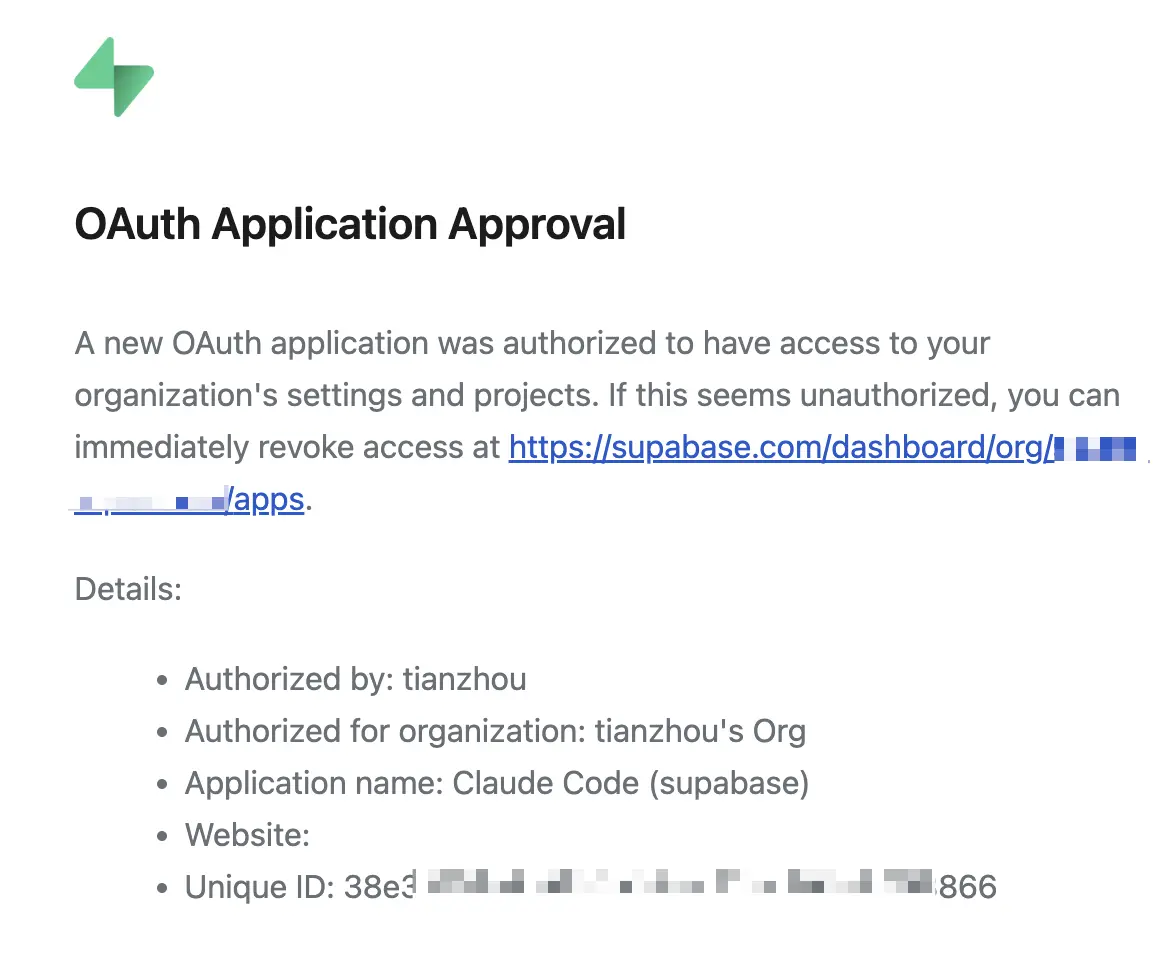
Tools
Supabase MCP provides over 20 tools organized into feature groups. These tools serve as a wrapper around the Supabase Management API, translating MCP tool calls into the corresponding API endpoints. For example:- execute_sql calls the query endpoint
- apply_migration calls the migration endpoint.
Token Efficiency
Loading All Tools
The default configuration loads all 29 tools across all feature groups:Selecting Specific Feature Groups
A more efficient approach is to specify only the feature groups you need. For example, if you only need database operations and documentation search:Security
Database MCP servers face a fundamental challenge: LLMs cannot distinguish between instructions and data. In July 2025, security researchers demonstrated this with the “lethal trifecta” attack—a prompt injection vulnerability affecting all database MCP servers, not just Supabase. This is an industry-wide problem with no complete solution. Supabase has implemented several mitigations and prominently features security best practices in their documentation. Key configuration options include: Project Scoping — Restricts operations to a single project:supabase_read_only_user:
Summary
Supabase MCP Server isn’t a general-purpose PostgreSQL MCP server—it’s a management interface specifically for Supabase projects. The hosted architecture, OAuth authentication, and Supabase-specific features (branching, Edge Functions) only work with Supabase, so this is for teams already using the platform.The Good
- Simple setup: Add one JSON configuration block and authenticate via OAuth 2.1 with automatic token refresh. No binary downloads, no local servers, no dependency management, no hardcoded credentials. Most database MCP servers still require manual credential management in config files.
-
Better security defaults: While prompt injection attacks affect all database MCP servers, Supabase implements more security guardrails than most. OAuth authentication with project scoping prevents cross-project access. Read-only mode uses a dedicated
supabase_read_only_user(not just query filtering).
The Bad
- Supabase lock-in: Can’t connect to external PostgreSQL instances, other cloud providers, or on-premise databases. Your data must be in Supabase.
-
Feature group granularity: Token-conscious users may want to load individual tools rather than entire feature groups. The
features=databasegroup loads 6 tools (4.2k tokens) when you might only needexecute_sql. -
Beta API and missing safeguards: Some Management API endpoints it depends on like
execute_sqlare still tagged as beta and lack common safety parameters like row limits and timeouts.
Should You Use It?
If you’re already using Supabase: The MCP server is useful for AI-assisted schema design, migrations, and project management. The Supabase-specific features (branching, Edge Functions, TypeScript type generation) aren’t available in generic servers. Follow the security best practices—useread_only=true, restrict to specific projects with project_ref, and limit feature groups to reduce attack surface.
If you’re choosing a hosted Postgres provider:
Supabase MCP is a differentiator worth considering. It implements more security guardrails than most database MCP servers. While prompt injection remains unsolved industry-wide, the MCP integration is a factor to weigh when comparing Postgres providers—just understand the inherent risks and platform lock-in.
Postgres MCP Server Series:
- MCP Toolbox for Databases - Google’s multi-database MCP server with 40+ data source support
- Supabase MCP Server (this article) - Hosted MCP server for Supabase projects
- DBHub - Zero-dependency, token efficient MCP server for PostgreSQL, MySQL, SQL Server, MariaDB, and SQLite
- The State of Postgres MCP Servers - Landscape overview and future outlook